
Instability in the Strait of Hormuz—a route that carries ~20% of the world’s oil—creates energy price volatility.
That volatility doesn’t stay global.
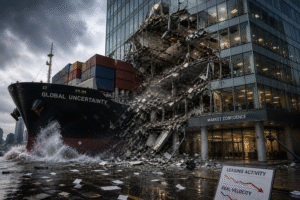 The Strait of Hormuz conflict directly impacts:
- How much it costs to build a space.
- How long it takes to deliver.
- How leases get structured.
Global risk is now a line item in local dealmaking.
Result:
→ Turnkey space is winning deals
→ Inefficient buildings lose leverage
1. Buildout Costs Become Unpredictable
Energy is a major input in steel, glass, cement, and finishes.
What Happens:
- Contractors can’t hold pricing
- TI budgets move mid-deal
- Landlords hesitate to commit to fixed buildouts
Leasing Result:
→ More push toward prebuilt or turnkey space
2. Timelines Stretch
What Happens:
- Fixtures and materials arrive late
- Buildouts extend beyond projections
Leasing Result:
→ More demand for rent abatements and flexible commencement dates
3. Operating Costs Come Into Focus
What Happens:
- Older buildings become more expensive to operate
- Expense uncertainty becomes a tenant concern
Leasing Result:
→ Tenants push for expense caps or modified gross deals